



Latest News
HBCUs Rise: How Howard Universities Breakthrough In Basketball Is Reshaping College Athletics


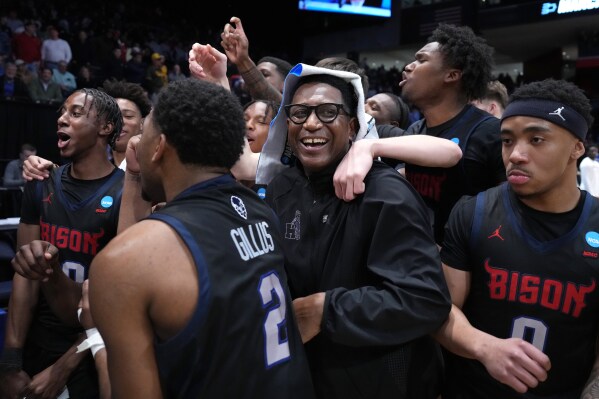
For decades, Historically Black Colleges and Universities have existed in a paradox within college sports—rich in culture, overflowing with talent, yet often overlooked on the national stage. That narrative is beginning to shift. And at the center of that shift is Howard University. The Bison’s historic NCAA Tournament victory wasn’t just a win—it was a statement. For years, HBCU programs have fought for visibility, earning tournament bids but rarely advancing far enough to command national attention. That changed when Howard broke through, capturing a defining win that resonated far beyond the scoreboard. It signaled that HBCUs are no longer just part of March; they’re capable of shaping it.
A Moment Bigger Than One Game
Howard’s run, paired with its MEAC Championship title, reflects more than a hot streak. It’s the product of intentional recruiting, player development, and a renewed belief in what HBCU programs can achieve. This wasn’t luck. It was an infrastructure meeting opportunity, and people across the country noticed. As HBCU programs gain exposure, something else is happening behind the scenes: talent pipelines are evolving. Athletes who once might have been overlooked, or chose HBCUs for culture and opportunity, are now being watched more closely than ever. With increased visibility comes increased interest, and FBS programs are beginning to take notice, pulling talent from HBCU rosters through the transfer portal. It’s a double-edged sword.
On one hand, it validates the level of talent within HBCU athletics. On the other hand, it presents a new challenge—retaining top players in a landscape where bigger budgets and national exposure still dominate. But make no mistake: the attention itself is a sign of progress.
Exposure Is Changing the Game
The rise of NIL opportunities, social media, and national broadcasts has helped level the playing field. HBCU athletes are building brands, gaining followers, and commanding attention in ways that were nearly impossible a decade ago. Howard’s breakthrough amplifies that momentum. It tells recruits: you don’t have to leave culture to find competition. Now is the turning point for HBCUs to grasp and run with. Yet, the question is whether HBCUs will make the investment to compete. This investment would include upgrading facilities, improving meal plans, and investing in national recruiting. This would signal whether this is a moment or a movement.
Can Howard’s success open doors for other basketball programs? Can conferences like the MEAC and SWAC consistently produce teams that not only reach March but disrupt it? History suggests we have been here before.


Coppin State University (1997)
What happened:
As a No. 15 seed, Coppin State stunned No. 2 seed South Carolina—one of the biggest upsets in NCAA Tournament history.
Why it didn’t gain lasting traction:
- No Sweet 16 run to extend visibility
- Limited TV exposure compared to today’s media landscape
- No sustained investment or recruiting boost afterward
- Pre-social media era = moment faded quickly
The win was historic—but it lived more as a trivia fact than a movement.


Hampton University (2001)
What happened:
No. 15 Hampton upset No. 2 Iowa State. The image of Tarvis Williams celebrating on the floor became iconic. Hampton’s loss in the next round cut short their momentum, limiting their national media push. The era of social media and the viral moment didn’t exist to document the excitement and drama of the time.


Norfolk State University (2012)
The talent on this team was undeniable, yet the energy did not carry over as the 15th-ranked Norfolk State shocked No. 2 Missouri, powered by NBA prospect Kyle O’Quinn. Despite star player Kyle O’Quinn showing the world he was NBA-ready, the program could not maintain national relevance after the big win. The win was a blip on the radar, even after O’Quinn quickly moved on to the pros. The media’s framing was one-sided, casting it as a fluke win that overshadowed the game as a bad night for Missouri in favor of headlines about an impressive win for a rising program. We can not be remiss without mentioning that there has always been a racial bias in the national media when it comes to HBCUs and their wins over larger, predominantly white universities.


What a moment for HBCUs as this was the first win of the First Four game (play-in round), technically an NCAA Tournament victory. But the First Four game gets less national attention, and teams that win often do not advance deep into the bracket. The HBCU perception gap leads to the perception that their wins are the same, due to the belief that HBCU conferences are not strong.
Why These Wins Didn’t Shift the Landscape
Across all these cases, the pattern is clear:
1. No sustained runs
One win grabs attention. Multiple wins build legitimacy.
2. Media limitations
Before NIL and social media, HBCU exposure was minimal—even after big moments.
3. Recruiting barriers
Top talent still leaned toward Power 5 exposure, facilities, and resources.
4. Lack of institutional momentum
Wins weren’t always followed by increased funding, branding, or long-term strategy.


So, Why Does Howard’s Win Feel Different?
What separates this moment—and positions Howard University as a potential turning point—is the modern ecosystem surrounding college athletics. This isn’t just about one game anymore; it’s about timing. The transfer portal has fundamentally changed roster building, allowing programs to reload quickly and giving players the freedom to find systems that truly fit their game. At the same time, NIL opportunities have flipped the script—athletes no longer have to leave strong programs to chase visibility or financial gain. Now, they can help build something special and benefit from it in real time.
Then there’s social media, which has become just as powerful as any national broadcast. Moments don’t fade, they multiply. Fans, players, and communities drive the narrative, turning highlights into movements overnight. And underlying it all is a cultural shift. The HBCU experience is no longer seen as an alternative, it’s becoming a destination. Identity, pride, and opportunity are aligning in a way that resonates with today’s athlete.
The Bottom Line
HBCUs have had big moments before, but those moments stood alone. What Howard represents isn’t just another upset; it’s the possibility of sustained momentum. A chance to turn flashes of greatness into a consistent presence on the national stage. If that momentum builds, the conversation will shift from whether HBCUs can compete to how far they can go. And if that perception continues to evolve, this won’t just be remembered as a milestone, it will be recognized as the spark that helped elevate HBCU athletics into a new era defined by respect, relevance, and undeniable impact.


