Athletes To Watch

Why Players To Watch Are A Simple But Effective Tool For Exposure
A Player To Watch reel is more than a highlight post.
It can be the first introduction between an athlete and a college coach. One share, one repost, or one follow can lead to a coach clicking a profile, watching film, sending a message, inviting an athlete to Junior Day, or starting the recruiting process. That same visibility also helps athletes grow their social media presence. As their audience grows, so does their ability to build a personal brand, tell their story, connect with supporters, and prepare for future NIL opportunities.
The goal is simple: help athletes get seen, build their name, and create real opportunities. These stories show how athletes have used our platform, subscriptions, and media services to gain exposure, increase visibility, and open doors that may not have been available without consistent promotion.
Sometime It Just Takes A Friend Sharing A Reel On Twitter
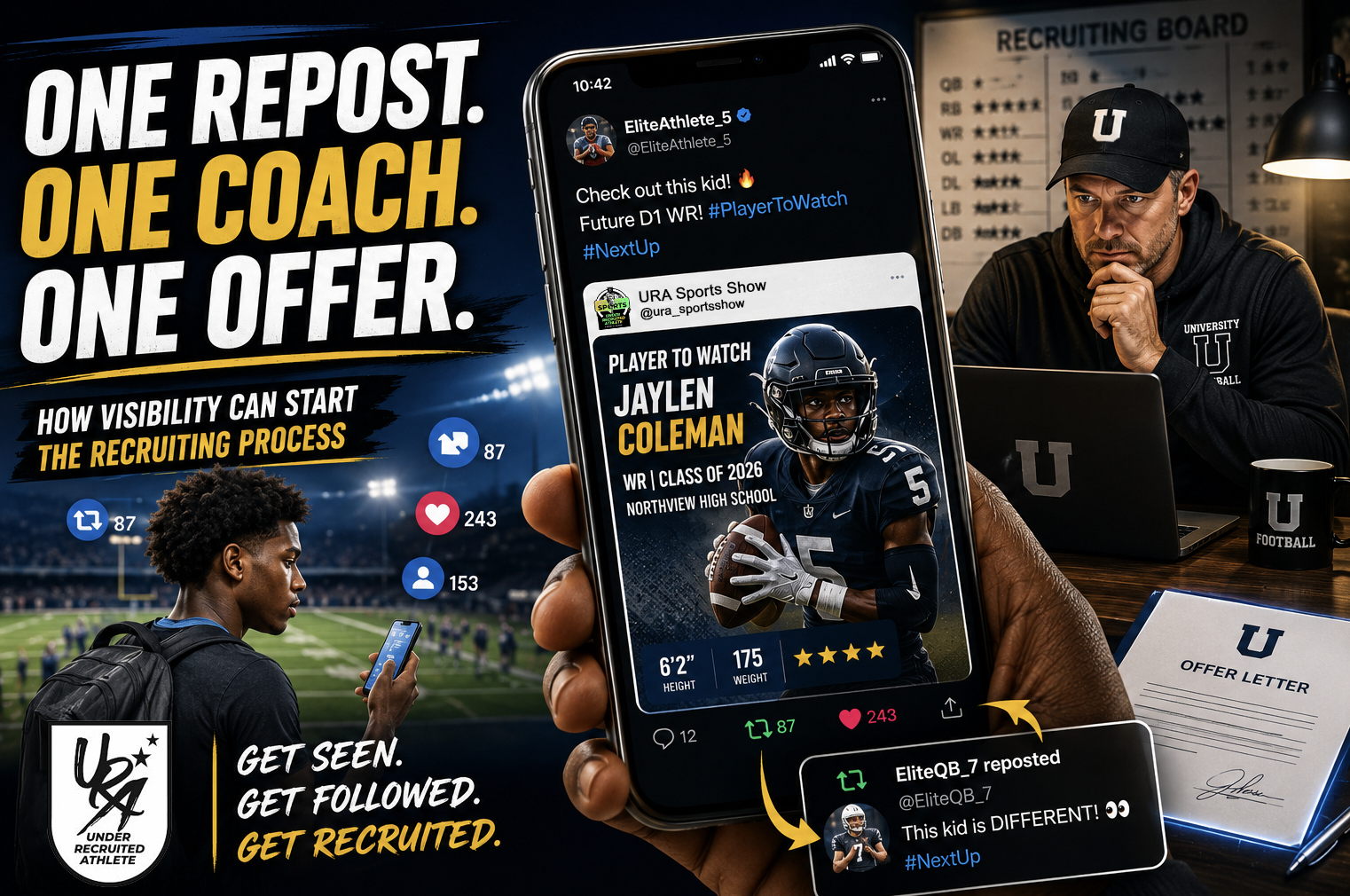
A Class of 2028 wide receiver was featured in a Player To Watch reel after standing out at an off-season camp. At first, the post gained traction through shares from teammates, family members, and a few local coaches. Then the reel was reposted on Twitter/X by another athlete from a different state with the caption, “This kid can play.”
That repost pushed the athlete beyond his original circle. Because the athlete who shared it already had college coaches following him, the reel started reaching a new recruiting audience. Not long after, an assistant coach who followed our page contacted us to ask for more information about the wide receiver. One Player To Watch reel turned into a real recruiting conversation because the right post reached the right people at the right time. So a link to the athlete’s profile page was sent over, which had all the necessary information the coach needed to start recruiting the athlete.
Two weeks after that, the athlete received a message inviting him to an unofficial visit to the university. By the end of the visit, the athlete expressed his interest and earned his first college offer. The offer did not come from a single post; it came because the reel created a pathway. The video caught attention, the social media profile provided more information, and the athlete’s HUDL film and unofficial transcripts confirmed he was worth recruiting.
Lesson:
One share can put an athlete in front of the right coach at the right time.
The Coach Who Wasn’t Looking For Him
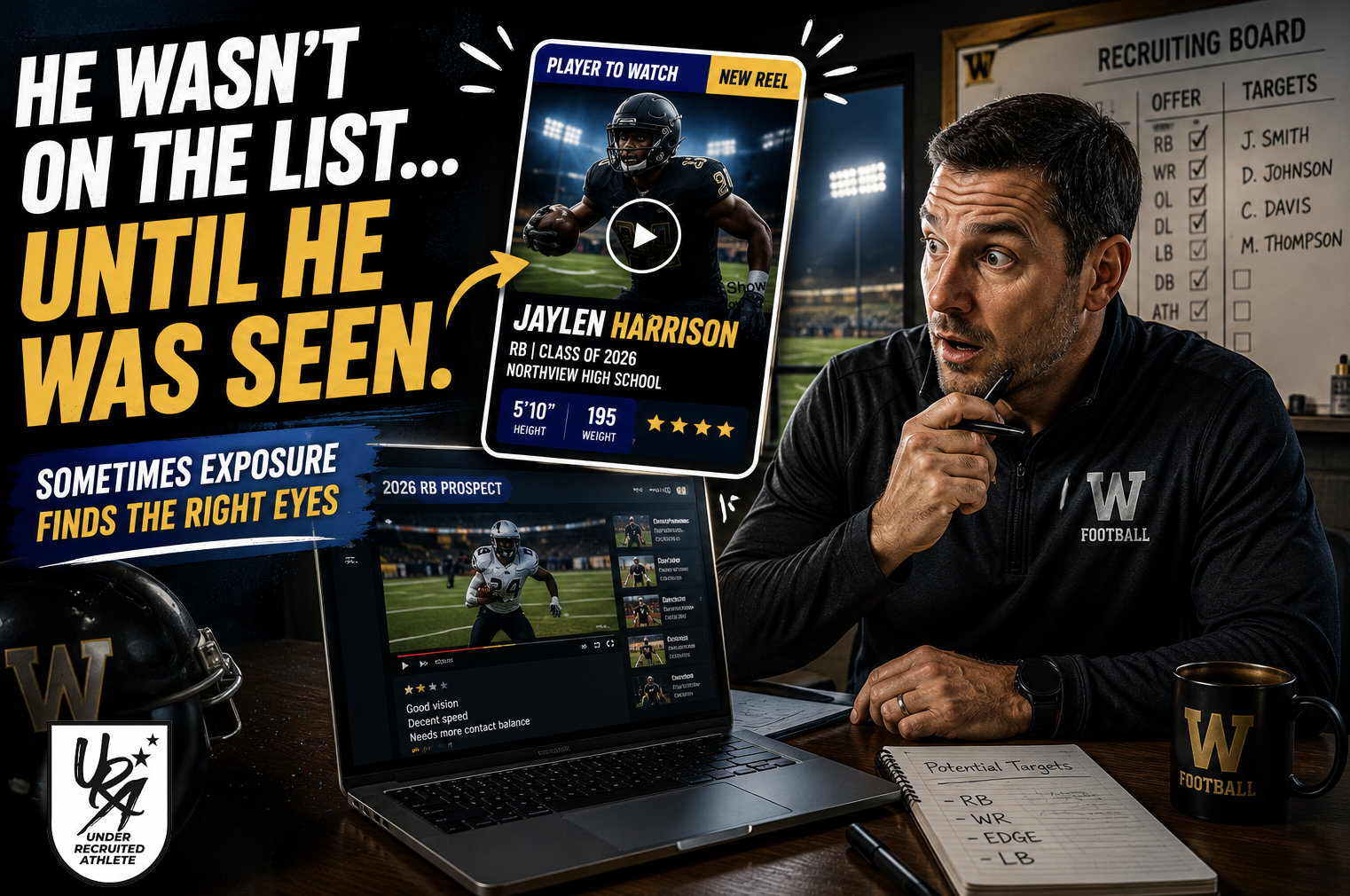
A college recruiter was originally watching film on a different player from the same region. While looking through Twitter/X, he saw a Player To Watch reel featuring a linebacker who had not yet been on his recruiting board. The reel was 60 seconds long and showcased his best 7 plays, giving the coach a taste of what he could do at linebacker. In the description, a professional message was included providing his name, position, school, profile page, HUDL, and contact information. The recruiter did not have to search hard to figure out who he was. Everything was presented clearly.
The coach followed the athlete, clicked his profile link, watched his full Hudl, and sent his information to the defensive coordinator. Two months later, the athlete contacted us to ask whether he should visit campus for a game-day visit. We emphasized the importance of researching the program to see whether it offered his major, so as not to waste the coach’s time. The school was a fit, so he attended the game, which led to continued communication, and by the spring, an official offer was extended to the athlete.
Lesson:
Sometimes coaches discover players while looking at someone else. Visibility creates unexpected opportunities.
Productive AAU Athlete Who Just Needed High School Coach To Give Him An Opportunity
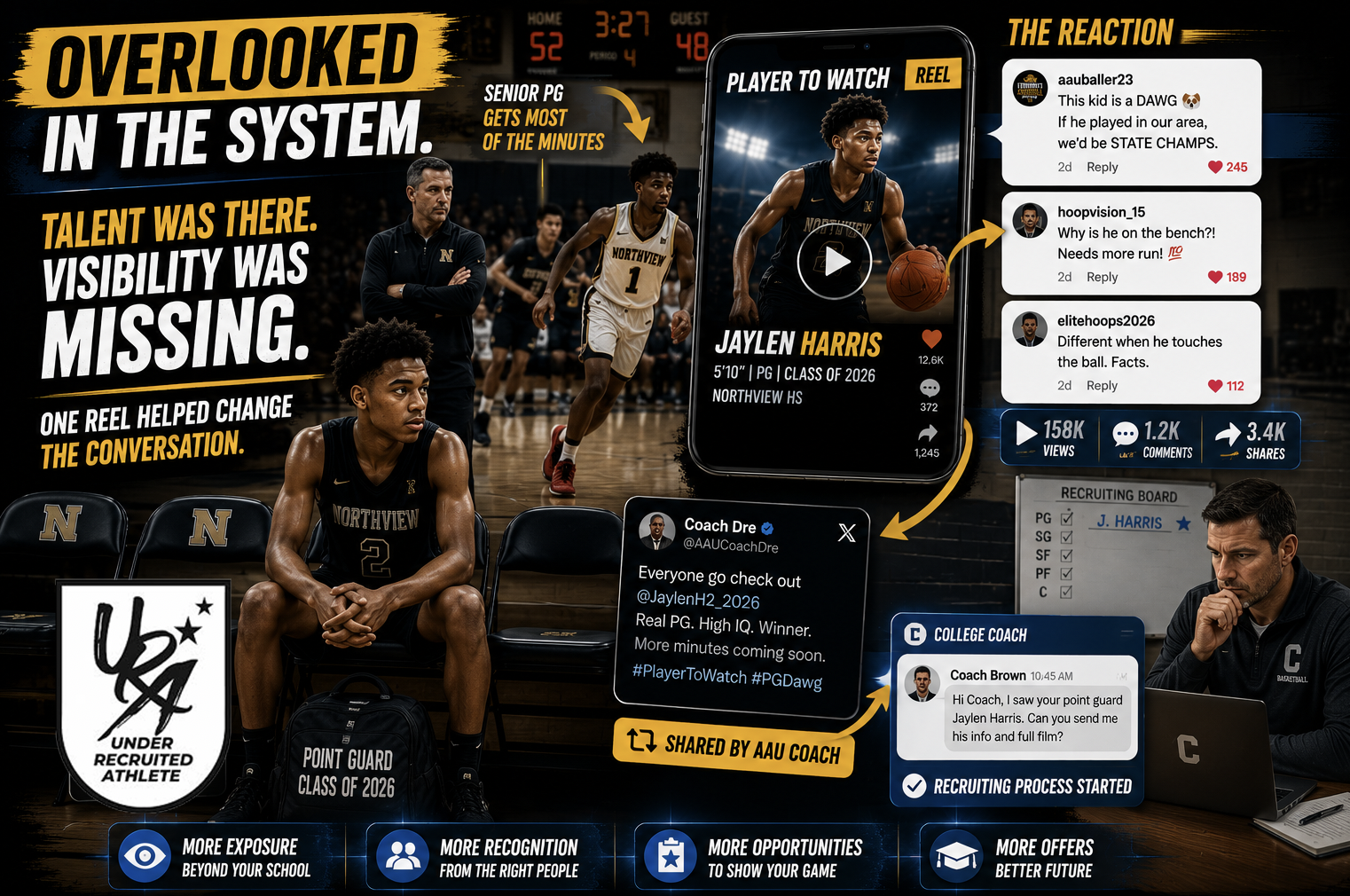
A point guard from a once-prominent basketball program was stuck in a tough situation. The school had a history of producing NBA and college talent, but rezoning and a newer nearby school had changed the program’s visibility. Even after strong AAU production and a promising freshman year, he entered his sophomore season worried about limited varsity minutes. The starting point guard was a senior, and the coach believed in giving seniors the bulk of the playing time, especially in big games.
The issue was not talent. The young guard produced when he got on the floor, but he was not getting enough minutes to build film against top competition. With little media coverage of recruiting and few college coaches coming through the area, his ability was being overlooked. That changed after he was featured in a Player To Watch reel on TikTok. The post gained traction, and an AAU opponent commented that if the guard played in their area, their team would make a championship run. The comment questioned why a player that talented was sitting on the bench and called him a “DAWG.” Other athletes joined the conversation, and one of his AAU coaches shared the link on Twitter/X. Soon after, a college coach reached out asking for more information.
The exposure helped push his name across the state and beyond. More people started recognizing him, media attention grew, and coaches who had never heard of him now had a reason to look him up. He was later listed by 247Sports as a 3-star athlete, and the added attention helped create more opportunities for him to play meaningful minutes at both point guard and shooting guard in bigger high school games.
Lesson:
For under-recruited athletes, exposure can help close the gap between talent and opportunity. Sometimes the issue is not ability, but timing, coaching philosophy, system fit, or lack of visibility. In today’s recruiting world, athletes need more than high school minutes. Recruiting is year-round, and social media, athlete profiles, AAU exposure, and digital storytelling can help talented players get seen when traditional systems overlook them.
From An Unexpected Handshake, To Junior Prospect Day Invite, His Life Changed
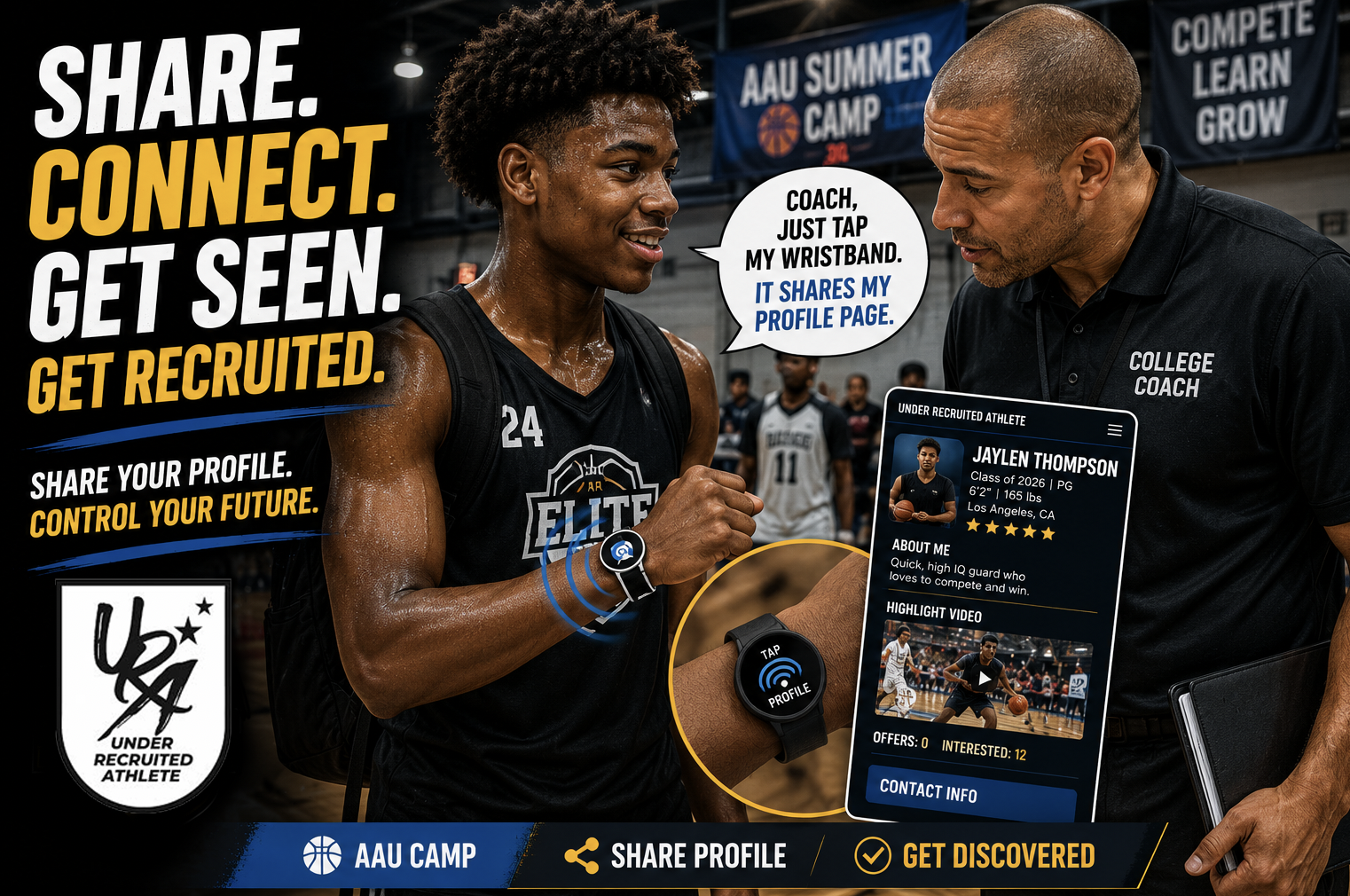
After a strong AAU game, an athlete had a brief conversation with a college coach near the court. Instead of just saying thank you and walking away, he made the moment count. He introduced himself, shared his position, class, school, and contact information, then used his DOT bracelet to give the coach instant access to his full player profile page.
That small interaction gave the coach everything he needed in one place, film, measurables, academic information, social media links, and contact details. Later that night, once the athlete got home, he took the next step. He followed the coach on social media and sent a short message with his Player To Watch reel, reintroducing himself and reminding the coach where they had met.
The coach responded and said he would send the athlete’s information to the area recruiter. That follow-up helped keep the conversation alive beyond the gym. Instead of being just another player from a busy AAU event, the athlete became someone the staff could identify, evaluate, and track.
Months later, the athlete received an invitation to Junior Prospect Day. When he arrived on campus, he reconnected with the same coach from the AAU event. Because they had already met, exchanged information, and stayed connected online, the relationship felt familiar. From there, the athlete continued to build communication with the staff and maintain a close recruiting relationship.
Lesson
Recruiting relationships often start with small moments, but athletes have to be prepared to turn those moments into opportunities. A handshake after a game is valuable, but a profile page, follow-up message, Player To Watch reel, and consistent communication can make that interaction last.
The easier an athlete makes it for a coach to find their film, contact information, academics, and social media, the easier it becomes for that coach to evaluate and remember them. Exposure is not just about being seen once, it is about being easy to find, easy to follow, and professional enough to stay on a coach’s radar.
D1 Path Delayed, Not Denied: Undersized, Overlooked, Then D1 Bound
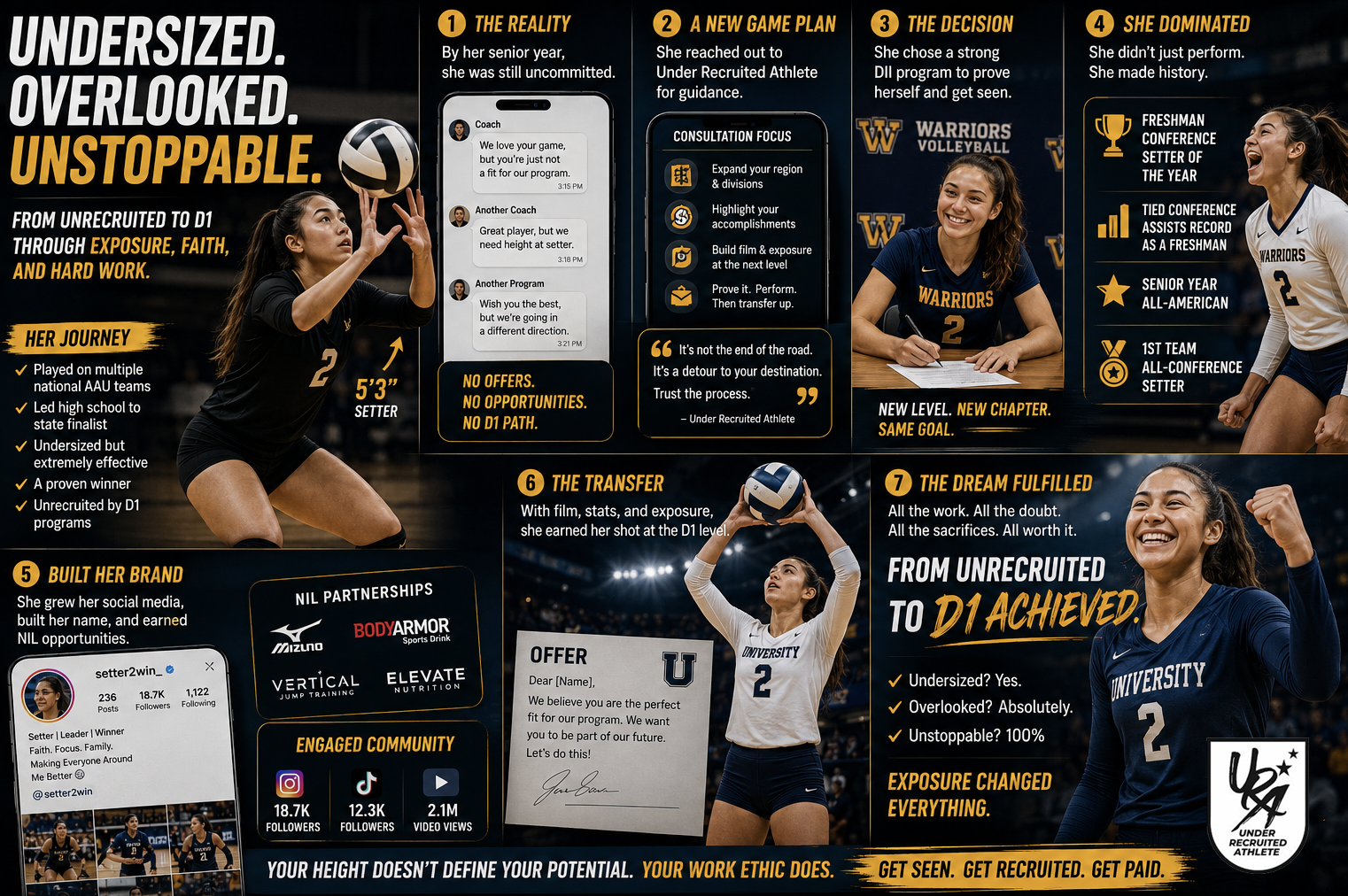
She was an undersized but highly effective volleyball setter who had always been a winner. She played on national AAU teams, helped lead state-finalist high school teams, and consistently proved she could run an offense. But because she did not have the ideal height many Division I programs wanted, she entered her senior year unrecruited, despite multiple coaches acknowledging her talent.
After reaching out to Under Recruited Athlete, she was encouraged to expand her recruiting options beyond a single division and region. Instead of waiting for the perfect D1 fit, she chose a lower-division program where she could play early, build film, and prove herself. She did exactly that, becoming a conference-level setter, tying a conference record as a freshman, earning All-American recognition, and finishing her career as a first-team setter.
Along the way, she also built her social media presence, grew her personal brand, and created NIL opportunities through consistent performance and visibility. By her grad year, she had the film, stats, awards, experience, and exposure needed to reach the Division I level she had always dreamed of.
Lesson
The first opportunity does not have to be the final destination. For under-recruited athletes, the right path may start at a lower division where they can play, produce, build film, grow their brand, and create leverage. Size, timing, or roster fit may cause an athlete to be overlooked, but performance and exposure can open the door to the level they truly belong.