



Latest News
PART II: The Cost of Chasing Exposure: Why Recruiting Culture Is Exhausting Families and Burning Out Young Athletes


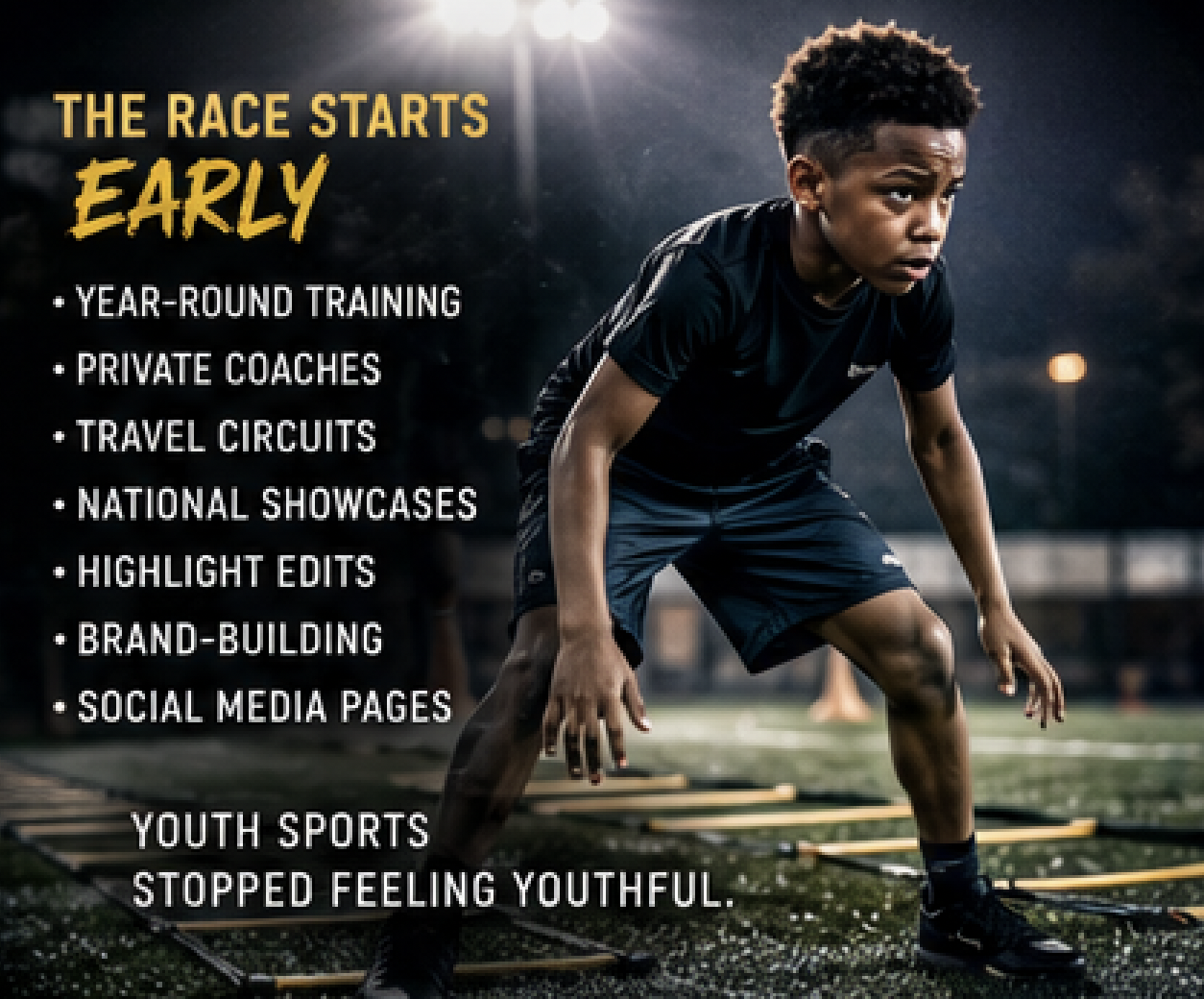
The modern recruiting race no longer begins in high school. For many families today, it starts before a child even reaches middle school. Private trainers, year-round camps, travel circuits, social media branding, highlight videos, and national showcases have completely changed youth sports culture. By the time some athletes reach ninth grade, they already have professionally designed graphics, edited mixtapes, and social media pages managed like businesses. Somewhere along the way, youth sports stopped feeling youthful. Parents feel it. Athletes feel it. Coaches definitely feel it. Beneath the highlights, rankings, and commitment edits lies a reality many families are struggling to admit: modern recruiting culture is becoming emotionally, financially, and mentally overwhelming.



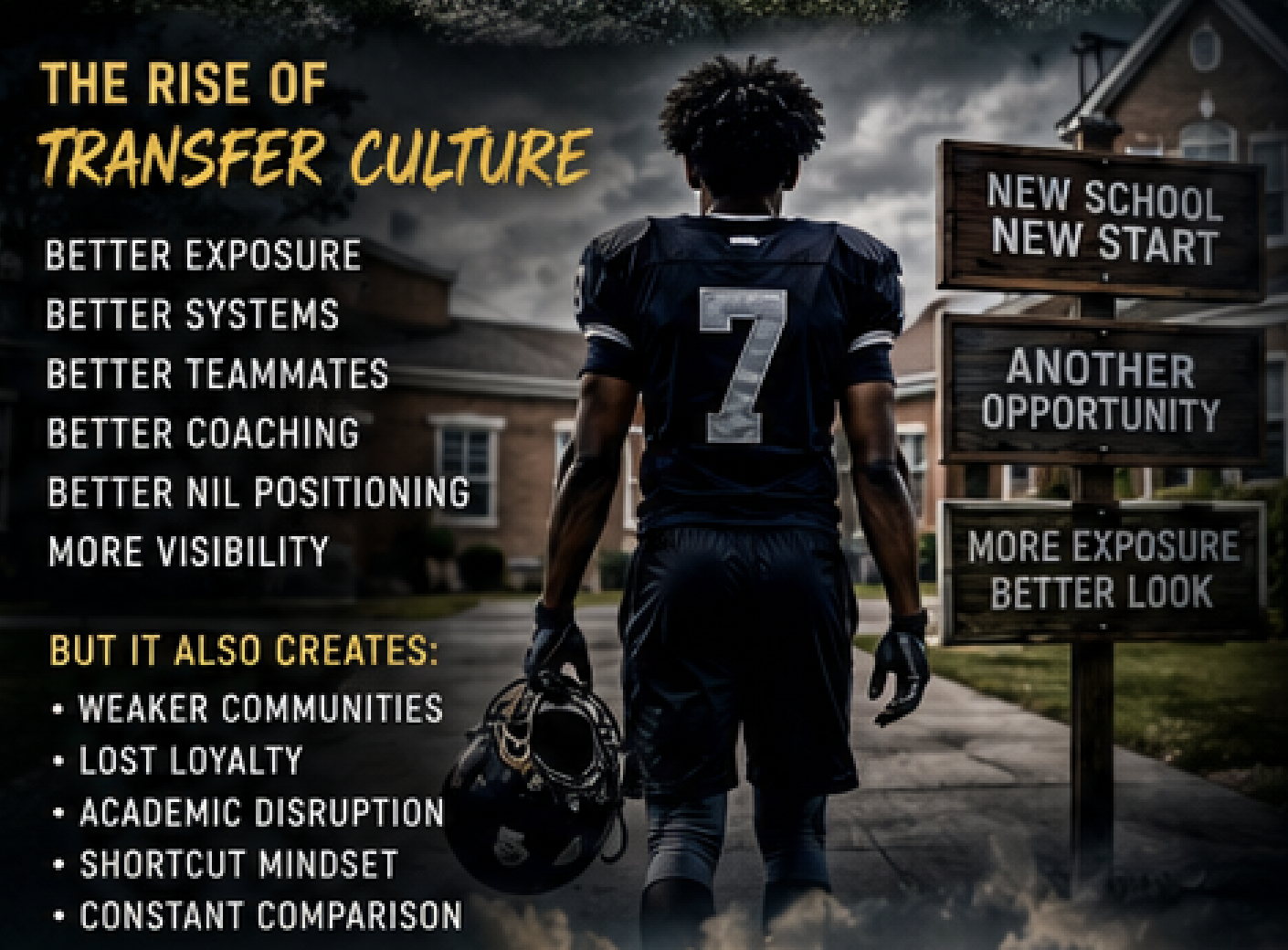
One of the biggest shifts reshaping high school athletics is the movement of athletes. Players now transfer schools in search of better exposure, better teammates, better coaching staffs, stronger systems, NIL positioning, and greater social media visibility. While transferring can absolutely help certain athletes, it has also created unintended consequences. Community identity weakens, team loyalty disappears, academics are disrupted, and families feel forced to constantly “upgrade” their environments for fear of being left behind. The message slowly becomes dangerous: if your child isn’t progressing fast enough, move them. If they’re not getting attention, relocate them. If they’re not visible enough, rebrand them. But development does not always work on social media timelines.
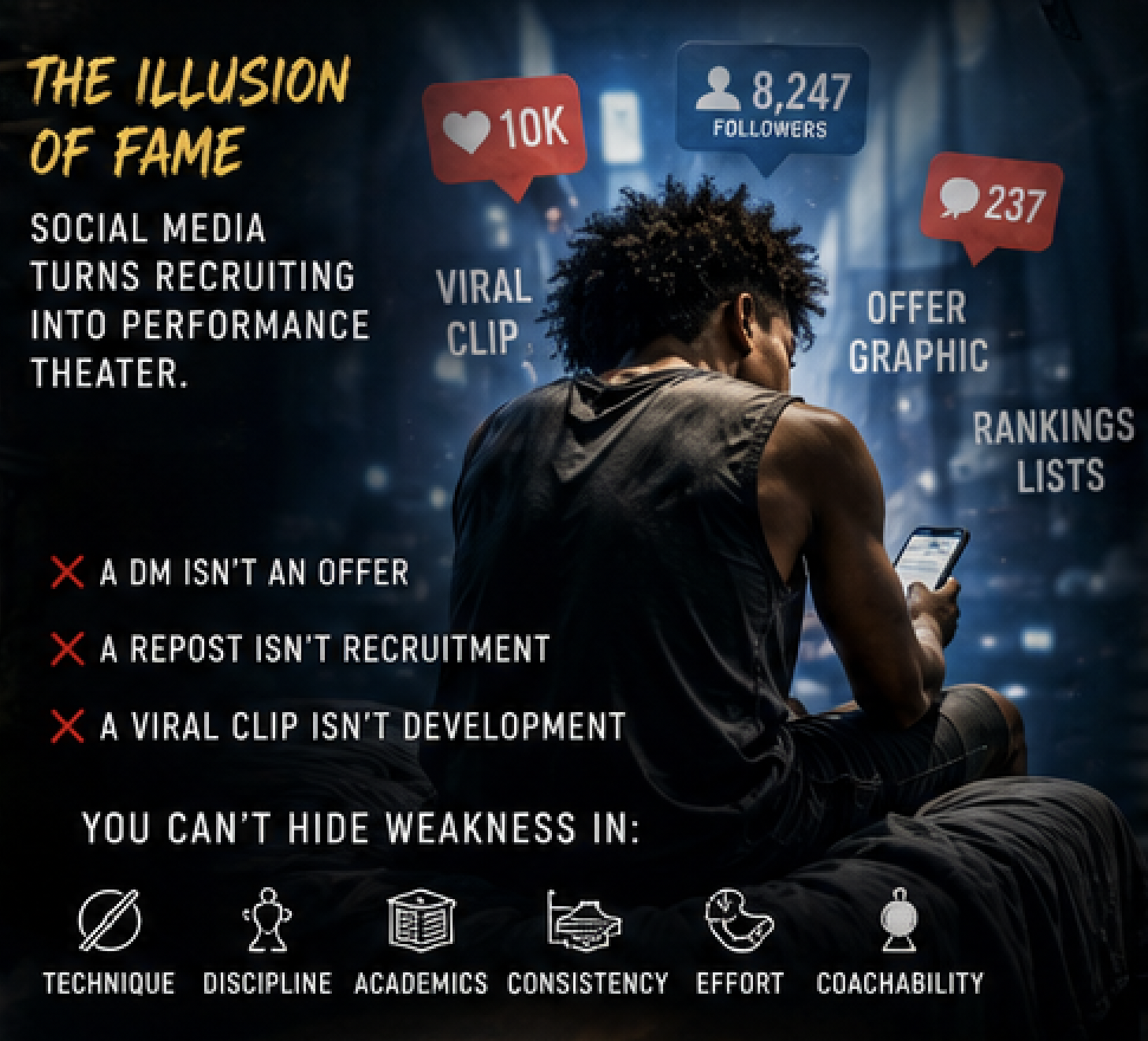
No generation of athletes has been subject to more public comparison than today’s young players. Recruiting has evolved into performance theater where followers become status symbols, offer graphics become validation, and highlights become identity. But according to coaches and recruiters, online popularity often masks reality. “The loudest athlete online is not always the most recruitable athlete.” That disconnect creates enormous emotional pressure for young athletes trying to balance sports, school, identity, and self-worth all at once. Some athletes begin measuring their value by engagement numbers rather than actual growth, while others start believing that exposure automatically creates opportunity. But it doesn’t. A repost isn’t recruitment. A DM isn’t an offer. A viral clip isn’t development. And no amount of editing can permanently hide weaknesses in discipline, technique, effort, academics, coachability, or consistency.
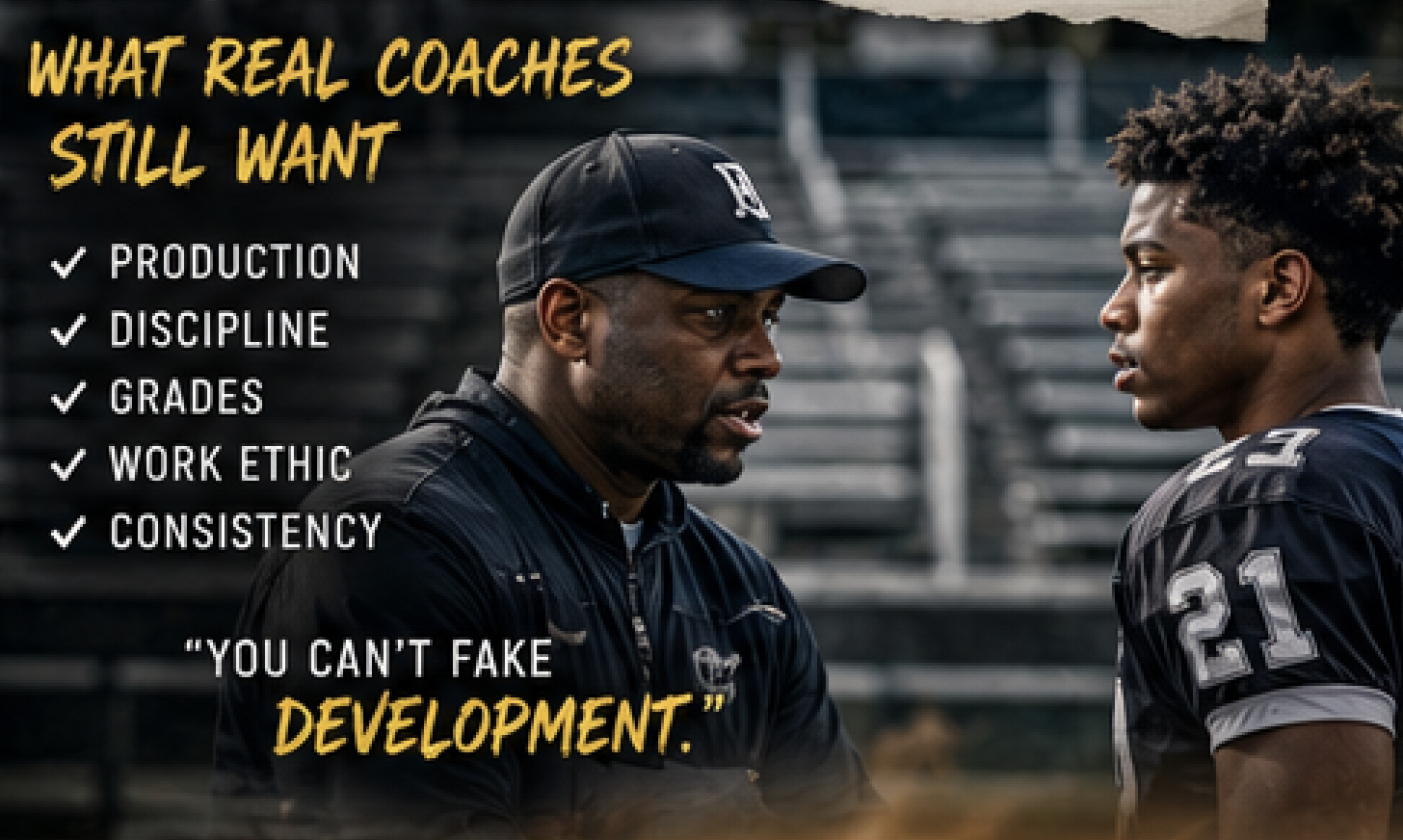
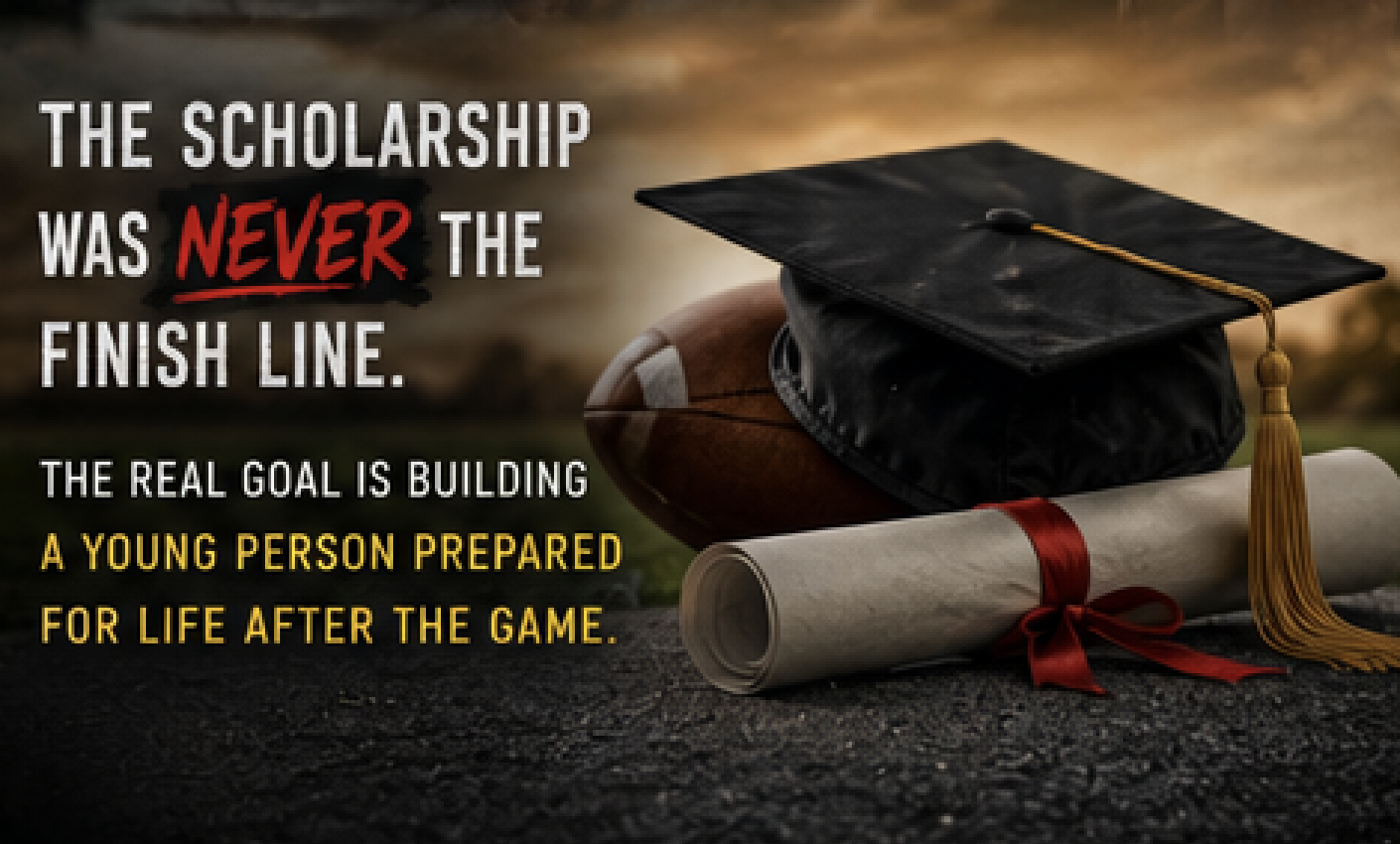
Despite all the noise surrounding recruiting culture, one truth still remains: real coaches still recognize real athletes. Beneath the politics, hype, and commercialization, college programs still prioritize production, discipline, grades, work ethic, and consistency. That’s why experienced coaches continue to warn families not to get distracted by shortcuts: development still wins in the long term, not hype, followers, graphics, or rankings. Eventually, every athlete reaches a level where branding no longer matters, and performance is the only thing left. At some point, somebody has to line up and actually compete. As recruiting becomes increasingly commercialized, families now face one difficult responsibility: learning who is genuinely helping athletes and who is simply profiting from the dream. Because not everybody selling exposure is connected to opportunity, and not everybody offering visibility is offering development. Relationships matter. Trust matters. Connections matter. Money matters. But long after the rankings fade and the highlight clips disappear, the athletes who survive this environment are usually the ones who stayed grounded while everybody else chased hype. And maybe that’s the hardest truth for parents to accept: the scholarship was never supposed to be the finish line. The real goal was always building a young person prepared for life after the game.

